


À partir de 50 € d'achat, les frais de livraison en France métropolitaine sont à 0,01 €

Présentation

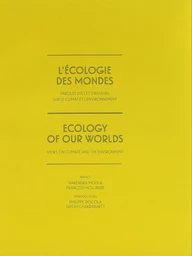
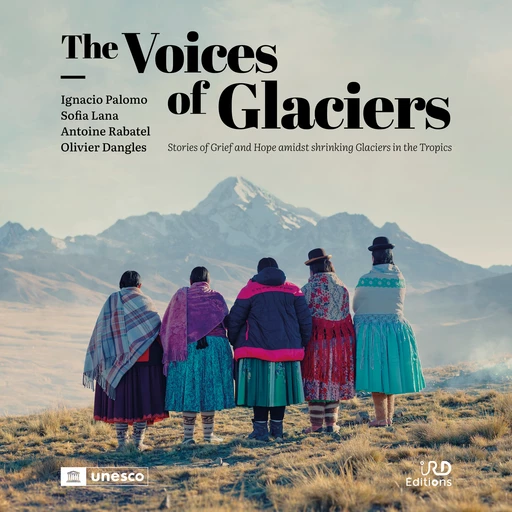
As glacier melting continues unabated at all latitudes, the loss of glaciers in the tropics provides an early glimpse of how a world without ice might be. This book gives voice to 35 diverse individuals whose lives are tied to tropical glaciers, relating their feelings, perceptions and experiences, as well as how they are adapting to a transforming reality. These testimonies, ranging from local Indigenous voices, tourists, rangers, scientists, alpinists, artists and more, with perspectives from disciplines from anthropology to glaciology to sustainability science, provide a unique window on the felt effects of glacier loss.

The images showing the loss of ice of glaciers in Africa, Latin America and Southeast Asia over the last 175 years tell their own powerful and incontrovertible story. By 2050, nearly half of the tropical glaciers in this book, including five UNESCO World Heritage Sites, four Biosphere Reserves and one Global Geopark, will be gone, and the majority will have lost around 90% of the surface area they covered during the Little Ice Age (circa 16th–19th centuries). This is a stark illustration of the impacts of climate change already occurring in some of the planet’s most vulnerable regions, and a bellwether of the future of glaciers elsewhere, and the people that depend on them, if we fail to mitigate it. 

Caractéristiques

Collection : Beaux-livres

Publication : 29 mai 2025

Intérieur : Couleur

Support(s) : Livre papier, eBook [pdf]

Poids (en grammes) : 854

Langue(s) : Anglais

EAN13 Livre papier : 9782709930734

EAN13 eBook [pdf] : 9782709930741

Sommaire

Tropical glaciers: an oxymoron under threat

Who are these voices ?

Where are they found ? 

The importance of emotion :

  • Care
  • Concern
  • Sadness and loss
  • Acceptance
  • Hope

Contributions

  • Ignacio Palomo (Coordination éditoriale de)

    Ignacio Palomo is an environmental sciences researcher at the French National Research Institute for Sustainable Development (IRD) and the University Grenoble Alpes. He is a member of the Global Young Academy, an international society of young scientists, and co-founder of the Young Academy of Spain, a member of the International Science Council. He has contributed to several reports of the Intergovernmental Science-Policy Platform on Biodiversity and Ecosystem Services (IPBES) and has published over 80 scientific articles. An avid photographer and climber, he lives in the French Alps.

    Ignacio Palomo es investigador en ciencias ambientales en el Instituto Nacional de Investigación para el Desarrollo Sostenible (IRD) de Francia y en la Universidad Grenoble Alpes. Es miembro de la Global Young Academy, una sociedad internacional de jóvenes científicos, y cofundador de la Academia Joven de España, miembro del Consejo Internacional de la Ciencia. Ha colaborado en varios informes de la Plataforma Intergubernamental Científico-Normativa sobre Diversidad Biológica y Servicios de los Ecosistemas (IPBES) y ha publicado más de 80 artículos científicos. Apasionado de la fotografía y el alpinismo, vive en los Alpes franceses.

  • Sofia Lana (Coordination éditoriale de)

    Sofía Lana is working on a doctorate in sociocultural anthropology at the University of California, San Diego. Her comparative, ethnographic research on the Andes in Bolivia and Argentina explores the effects of glacial melt in arid environments, investigating how stakeholders near melting glaciers dispute and negotiate resources, territory and the production of knowledge. She has also conducted research on human rights issues, particularly relating to gender in different contexts of incarceration. A mountaineering enthusiast, she has climbed several Andean peaks.

    Sofía Lana está cursando un doctorado en antropología sociocultural en la Universidad de California, San Diego. Su investigación comparativa y etnográfica sobre los Andes en Bolivia y Argentina explora los efectos del deshielo glacial en entornos áridos, investigando cómo las partes interesadas cercanas a los glaciares en deshielo discuten y negocian los recursos, el territorio y la producción de conocimiento. También ha realizado investigaciones sobre cuestiones de derechos humanos, en particular en relación con el género en diferentes contextos de encarcelamiento. Apasionada del alpinismo, ha escalado varios picos andinos.

  • Antoine Rabatel (Coordination éditoriale de)

    Antoine Rabatel is a glaciologist and physicist at the University Grenoble Alpes. He has worked on monitoring Andean glaciers since the early 2000s and leads the glacier monitoring service GLACIOCLIM in the Andes, a collaborative project between France and local partners in Bolivia and Ecuador. Passionate about mountains and glaciers since childhood, he enjoys the harmony, power and tranquillity of these environments, beyond investigating them in his research work.

    Antoine Rabatel es glaciólogo y físico en la Universidad Grenoble Alpes. Trabaja en la monitorización de los glaciares andinos desde principios de la década de 2000 y dirige el servicio de monitorización de glaciares GLACIOCLIM en los Andes, un proyecto colaborativo entre Francia y socios locales en Bolivia y Ecuador. Apasionado por las montañas y los glaciares desde su infancia, disfruta de la armonía, la fuerza y la tranquilidad de estos entornos, más allá de investigarlos en su trabajo de investigación.


  • Olivier Dangles (Coordination éditoriale de)

    Olivier Dangles est écologue, chercheur à l'IRD où il a été directeur adjoint délégué à la science, en charge de la science de la durabilité de 2020 à 2023. Sa démarche scientifique, à la fois nomade et sensible à l'esthétique, aborde les enjeux de durabilité de plusieurs écosystèmes, dans les Andes tropicales en particulier. 


    Olivier Dangles es ecólogo, director de investigación y subdirector científico adjunto encargado de la ciencia de la sostenibilidad en el IRD. Su investigación, anclada en un enfoque interdisciplinario de la ciencia de la sostenibilidad, se centra en la respuesta de la biodiversidad a los cambios globales, tanto en ecosistemas naturales como antropizados.


    Olivier Dangles is a researcher in sustainability science at IRD and co-founder of WasiLab at the Pontificia Universidad Católica del Ecuador. His scientific approach, both nomadic and attentive to aesthetics, engages with sustainability challenges across multiple ecosystems, with a particular focus on the tropical Andes.

Sur le même thème

Dans la même collection

--:-- / --:--